
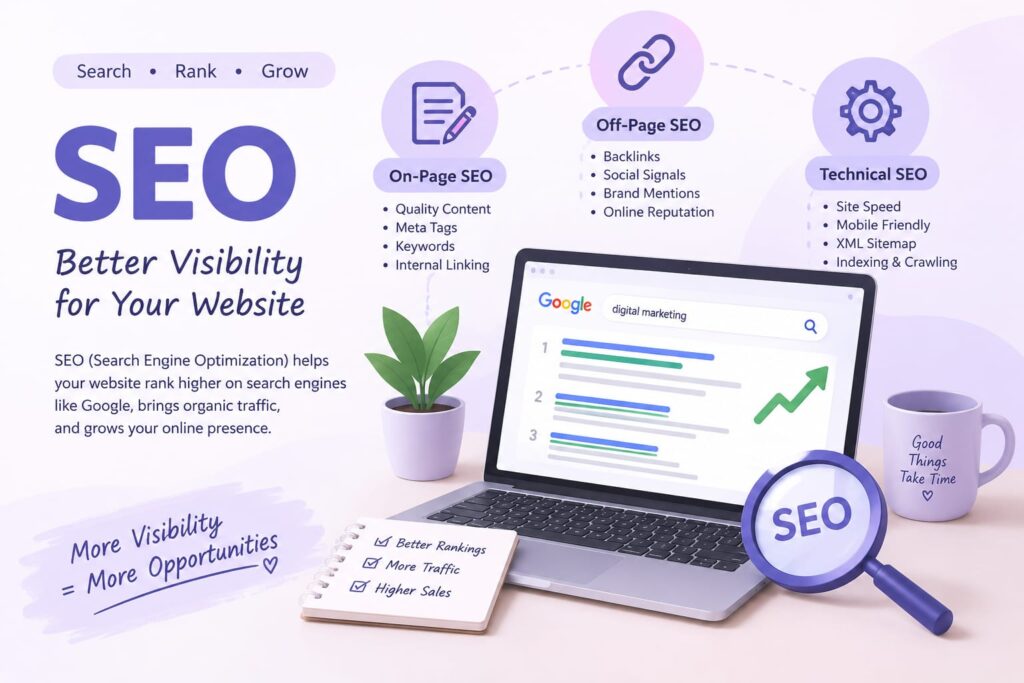
In today’s digital world, having a website is not enough to attract customers. Businesses also need to make sure that people can find their websites through search engines like Google. This is where SEO becomes important. It helps websites improve their visibility in search results and attract people who are searching for relevant information, products, or services.
If you want to grow your online presence, understanding SEO is an important first step. In this blog, you will learn what SEO is, how it works, its main types, and why it matters for businesses.
What Is SEO?
SEO stands for Search Engine Optimization. It is the process of improving a website to increase its visibility in the organic, or unpaid, results of search engines.
When people search for information on Google, they usually see a list of web pages related to their queries. SEO helps search engines understand website content and determine how relevant and useful it may be for a particular search.
For example, if someone searches for “best website design services,” a website offering website design may want to appear in those search results. By creating helpful content, improving website structure, and using relevant keywords, the business can work towards better search visibility.
SEO does not guarantee the first position on Google, but it can help a website attract relevant visitors over time.
How Does SEO Work?
Search engines use automated systems to discover, understand, and organize web pages. SEO helps website owners make their content easier for search engines and visitors to understand.
There are three important stages involved in how search engines work.
1. Crawling
Crawling is the process through which search engines discover web pages using automated programs called crawlers. These programs follow links and explore website content to find new or updated pages.
A website with clear navigation and accessible links can make it easier for search engines to discover its important pages.
2. Indexing
After discovering a page, Google analyzes its content, images, and other information to understand what the page is about. Google may then store the information in its index.
However, discovering a page does not guarantee that Google will index it. Website owners can use Google Search Console to check indexing status and identify certain technical issues.
3. Ranking
When someone searches for something, search engines use various signals to decide which results are most relevant and useful.
These signals can include the meaning of the search query, content relevance, page usability, and other factors. Creating helpful content that satisfies the user’s search intent can improve a website’s chances of appearing for relevant queries.
What Are the Main Types of SEO?
SEO includes several activities that work together to improve website visibility.
1. On-Page SEO
On-page SEO involves optimizing elements within your website. It helps search engines and visitors understand your content.
Important on-page SEO activities include:
- Using relevant keywords naturally.
- Writing descriptive title tags and meta descriptions.
- Organizing content with clear headings.
- Adding descriptive alt text to meaningful images.
- Creating useful internal links.
- Publishing original and helpful content.
For example, if your blog focuses on “What Is SEO,” your title, introduction, headings, and content should clearly explain the topic.
2. Off-Page SEO
Off-page SEO includes activities performed outside your website to improve its reputation and visibility.
One important part of off-page SEO is earning backlinks from relevant and trustworthy websites. A backlink is a link from another website to your website.
Businesses can also build their online reputation by creating valuable content, developing professional relationships, and promoting their work through appropriate channels.
However, buying spammy links or participating in manipulative link schemes can harm SEO performance.
3. Technical SEO
Technical SEO focuses on making a website easier for search engines to crawl and understand.
Common technical SEO activities include:
- Improving website loading speed.
- Making the website mobile-friendly.
- Fixing broken links.
- Creating and submitting an XML sitemap.
- Using HTTPS to secure the website.
- Identifying crawling and indexing problems.
A technically accessible website provides a stronger foundation for other SEO activities.
Why Is SEO Important for Businesses?
SEO can help businesses improve their online presence and connect with potential customers.
1. Increases Organic Traffic: SEO can help a website attract visitors from unpaid search results when its pages appear for relevant searches.
2. Improves Online Visibility: Better search visibility can help more people discover a business and its services.
3. Builds Credibility: Helpful content and a professional website can support user trust. However, ranking highly does not automatically mean a business is trustworthy.
4. Supports Long-Term Growth: SEO can continue attracting visitors after content is published, although performance may change over time.
5. Reaches Relevant Audiences: Targeting appropriate search queries helps businesses connect with people who are actively looking for related information or services.
How Can Beginners Start Learning SEO?
If you are new to SEO, begin with the basics instead of trying to learn everything at once.
First, understand your target audience and identify the topics they search for online. Next, conduct keyword research to find relevant search terms. Create useful content that answers people’s questions and organize it with clear headings.
Then, optimize your title tags, meta descriptions, images, and internal links. Check whether your website works properly on mobile devices and loads efficiently.
You should also set up Google Search Console to monitor search impressions, clicks, and indexing information. Google Analytics can help you understand website traffic and visitor behaviour.
Finally, review your results regularly and update content when necessary. SEO requires consistent effort, and improvements may take time to appear.
Conclusion
SEO is an important part of digital marketing because it helps websites improve their visibility in organic search results. By understanding crawling, indexing, and ranking, website owners can make better decisions about their content and website structure.
Learning on-page SEO, off-page SEO, and technical SEO can help beginners develop a strong foundation. With useful content, a well-organized website, and regular performance monitoring, businesses can work towards attracting relevant visitors and building a stronger online presence.