Introduction
In today’s digital world, having a strong online presence is important for every business. Whether you run a small shop, a restaurant, a clothing brand, or an online store, digital marketing can help you reach more people and attract potential customers.
However, every business has different goals, audiences, and budgets. A strategy that works well for one business may not deliver the same results for another. That is why choosing the right digital marketing strategy is essential.
In this blog, we will explore how to choose a digital marketing strategy that matches your business goals and supports long-term growth.
What Is a Digital Marketing Strategy?
A digital marketing strategy is a planned approach to promoting your business through online channels. It helps you decide how to reach your target audience, communicate your message, and achieve your business goals.
It may include search engine optimization (SEO), social media marketing, content marketing, email marketing, and paid advertising.
For example, a local bakery may use Instagram to showcase its products and Google Business Profile to attract nearby customers. An online clothing store may focus on social media advertising, SEO, and engaging website content.
The right strategy depends on your business needs and the customers you want to reach.
Understand Your Business Goals
Before choosing any marketing channel, identify what you want to achieve. Clear goals help you select suitable marketing activities and measure your progress.
Your goals may include:
- Increasing brand awareness: Help more people discover your business.
- Generating leads: Encourage potential customers to contact you or request information.
- Increasing website traffic: Bring more relevant visitors to your website.
- Boosting sales: Encourage customers to purchase your products or services.
- Building customer relationships: Keep existing customers engaged and encourage repeat business.
For example, if you own a website design business, your goal might be to generate more inquiries from small business owners. You could create helpful blog posts, improve your website’s SEO, and add clear contact buttons to your service pages.
Choose goals that are specific, realistic, and relevant to your business.
Identify Your Target Audience
Your target audience includes the people who are most likely to be interested in your products or services. Understanding their needs helps you create more relevant marketing messages.
Consider the following questions:
- Who are your potential customers?
- What problems do they want to solve?
- What products or services are they looking for?
- Which online platforms do they use?
- What information helps them make purchasing decisions?
For example, a business selling handmade jewellery may target people interested in unique accessories and gift ideas. It could share product photos, styling tips, and gift guides on relevant social media platforms.
When you understand your audience, you can create content that answers their questions and explains how your business can help them.
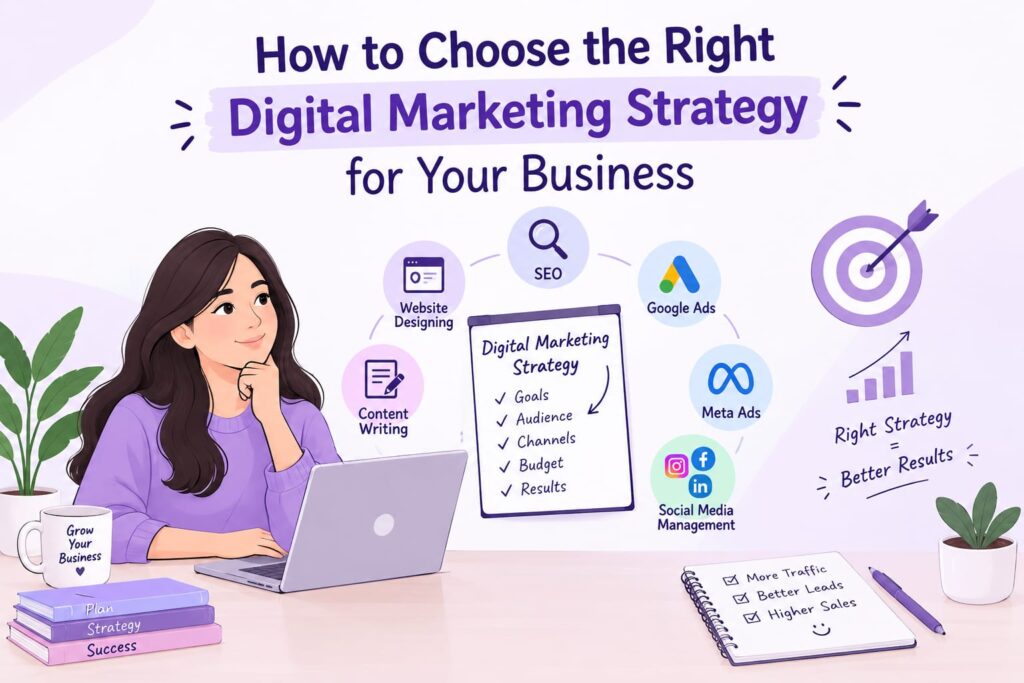
Choose the Right Digital Marketing Channels
Not every business needs to use every digital marketing channel. Focus on the platforms that help you reach your audience and support your goals.
1. Search Engine Optimization (SEO)
SEO helps improve your website’s visibility in search engine results. It includes creating useful content, using relevant keywords naturally, improving website structure, and providing a good user experience.
SEO can be useful for businesses that want to attract people who are actively searching for their products or services.
For example, a local web designer can create a helpful page targeting searches related to website design services for small businesses.
2. Social Media Marketing
Social media marketing helps businesses connect with their audience, share updates, showcase products, and build brand awareness.
Platforms such as Instagram, Facebook, and LinkedIn serve different audiences and business needs. Choose platforms based on where your potential customers spend their time.
For example, a clothing boutique might use Instagram to share new collections, while a business-to-business service provider might use LinkedIn to build professional connections.
3. Content Marketing
Content marketing involves creating useful and relevant content, such as blog posts, guides, videos, and informative website pages.
It helps answer customer questions, build trust, and demonstrate your knowledge. High-quality content can also support your SEO efforts and bring visitors to your website over time.
For example, a digital marketing website can publish blogs about SEO basics, online advertising, and ways to improve website traffic.
4. Paid Advertising
Paid advertising allows businesses to promote their products or services through platforms such as Google Ads and Meta Ads.
Google Ads can help you reach people searching for particular products or services. Meta Ads can help you reach selected audiences on Facebook and Instagram.
Paid advertising may produce results faster than SEO, but performance depends on your offer, targeting, budget, and campaign quality. Start with a clear objective and monitor your spending carefully.
Set Your Digital Marketing Budget
Your budget plays an important role in deciding which marketing activities you can manage.
Small businesses do not always need a large marketing budget to get started. You can begin with activities that fit your resources and expand as you learn what works.
Consider these points when planning your budget:
- Decide how much you can comfortably spend.
- Prioritize the marketing channels most relevant to your goals.
- Include costs for advertising, content creation, tools, or professional services.
- Keep some flexibility for testing and improvement.
- Review your spending regularly.
For example, a new business with a limited budget may start by improving its website, publishing useful blog posts, and maintaining social media profiles. Once it understands which channels attract relevant customers, it can consider investing in paid advertising.
The goal is not simply to spend more money but to use your budget effectively.
Measure Your Results
Choosing a strategy is only the beginning. You also need to track its performance to understand whether your marketing activities are helping your business.
Useful metrics include:
- Website traffic: How many people visit your website?
- Impressions: How often does your content appear in search results or on advertising platforms?
- Engagement: How do people interact with your social media content?
- Leads: How many people contact your business or submit inquiries?
- Conversions: How many visitors complete a desired action, such as making a purchase?
- Cost per lead: How much do you spend to generate a lead through a particular campaign?
Tools such as Google Analytics, Google Search Console, and advertising platform reports can help you understand different aspects of your performance.
Review your results regularly and identify what needs improvement. If a blog post attracts relevant visitors but generates few inquiries, you may need to improve its calls to action or make your service information clearer.
Remember that marketing results take time, especially with SEO and content marketing. Evaluate progress over an appropriate period instead of making decisions based on a few days of data.
Conclusion
Choosing the right digital marketing strategy starts with understanding your business goals, identifying your target audience, selecting suitable marketing channels, and setting a realistic budget.
You do not need to use every digital marketing method at once. Begin with the activities most relevant to your business, measure their performance, and improve your approach as you gain experience.
A well-planned strategy can help your business build an online presence, connect with potential customers, and work towards sustainable growth.
At Grow with Simran, we believe that the right digital approach begins with understanding your business needs. Explore our digital marketing services to discover how a suitable online strategy can support your business goals.