
How Does SEO Help a Website Rank on Google?
Every business wants its website to appear on the first page of Google. However, creating a website is not enough to attract visitors. You also need to make your website visible in search engine results. This is where Search Engine Optimization (SEO) plays an important role.
How does SEO help a website improve its visibility on Google? SEO helps search engines understand your website, identify relevant content, and determine which pages may be useful for users searching for specific information.
In this blog, we will understand how SEO works and how it helps websites improve their Google rankings.
What Is SEO?
SEO stands for Search Engine Optimization. It is the process of improving a website to increase its visibility in organic search results.
When people search for information, products, or services on Google, they usually visit websites that appear among the top results. SEO helps businesses improve their chances of appearing in those results.
SEO includes different activities, such as keyword research, content optimization, technical improvements, and link building.
How Does SEO Help a Website Rank on Google?
Understanding how SEO helps a website rank on Google requires knowing about different SEO techniques. These techniques help search engines understand your website and determine its relevance to users’ searches.
1. Keyword Research Helps Target the Right Audience
Keyword research is one of the most important parts of SEO. It helps you identify the words and phrases people use when searching for products, services, or information online.
For example, if you provide digital marketing services, people might search for:
- Digital marketing services
- SEO services for small businesses
- Website design services
- Content writing services
By using relevant keywords naturally in your website content, titles, and headings, you help search engines understand what your pages are about.
2. Quality Content Improves Website Visibility
Content plays an important role in SEO. Google aims to provide helpful and relevant information to users.
When you publish informative, original, and well-structured content, you give visitors a reason to explore your website.
How does SEO help a website through quality content? It helps search engines understand the information on your pages and match it with relevant search queries.
For better content optimization:
- Write content that answers users’ questions.
- Use relevant keywords naturally.
- Create clear headings and subheadings.
- Avoid unnecessary repetition.
- Update outdated information when needed.
3. On-Page SEO Helps Google Understand Your Pages
On-page SEO focuses on optimizing elements within your website.
These elements help search engines understand the topic and structure of your content.
Some important on-page SEO elements include:
- SEO titles
- Meta descriptions
- Heading tags (H1, H2, H3)
- Image alt text
- Internal links
- URL structure
- Keyword placement
Proper on-page optimization makes your content easier to understand for both users and search engines.
4. Technical SEO Improves Website Performance
Technical SEO focuses on improving the technical aspects of a website so that search engines can crawl, understand, and index its pages.
Some important technical SEO factors include:
- Website loading speed
- Mobile-friendly design
- Secure HTTPS connection
- XML sitemap
- Robots.txt configuration
- Proper canonical tags
- Fixing broken links
Technical improvements create a strong foundation for better website visibility.
5. Off-Page SEO Builds Website Authority
Off-page SEO includes activities performed outside your website to improve its online reputation and authority.
Backlinks are an important part of off-page SEO. A backlink is a link from another website pointing to your website.
For example, if a relevant and trustworthy website links to your blog, it can help Google discover your content and may contribute to your site’s authority.
Some off-page SEO activities include:
- Building quality backlinks
- Guest posting
- Relevant business listings
- Brand mentions
- Promoting useful content
Remember that quality and relevance matter more than simply collecting a large number of backlinks.
How Long Does SEO Take to Improve Google Rankings?
SEO is a long-term process. It does not usually produce immediate results.
The time required depends on several factors, including website competition, content quality, website condition, keyword difficulty, and the SEO strategy being used.
Some websites may notice improvements within a few months, while others may require more time.
Consistent optimization, helpful content, and regular performance monitoring can support long-term growth.
Why Is SEO Important for Small Businesses?
SEO is especially useful for small businesses that want to increase their online visibility without depending entirely on paid advertising.
Here are some benefits of SEO:
- More Organic Traffic: SEO helps attract visitors through unpaid search results.
- Better Online Visibility: Your website can appear for relevant searches.
- Targeted Audience: You can reach people already searching for your products or services.
- Business Credibility: Helpful content and a professional website can build user trust.
- Long-Term Growth: SEO can support consistent website traffic over time.
Conclusion
Now you understand how does SEO help a website improve its Google rankings through keyword research, quality content, on-page optimization, technical SEO, and backlinks.
SEO is not a one-time task. It requires consistent effort, regular updates, and performance analysis.
If you want to improve your website’s visibility, attract potential customers, and build a stronger online presence, investing time in a proper SEO strategy is important.
Every business wants its website to appear on the first page of Google. However, creating a website is not enough to attract visitors. You also need to make your website visible in search engine results. This is where Search Engine Optimization (SEO) plays an important role.
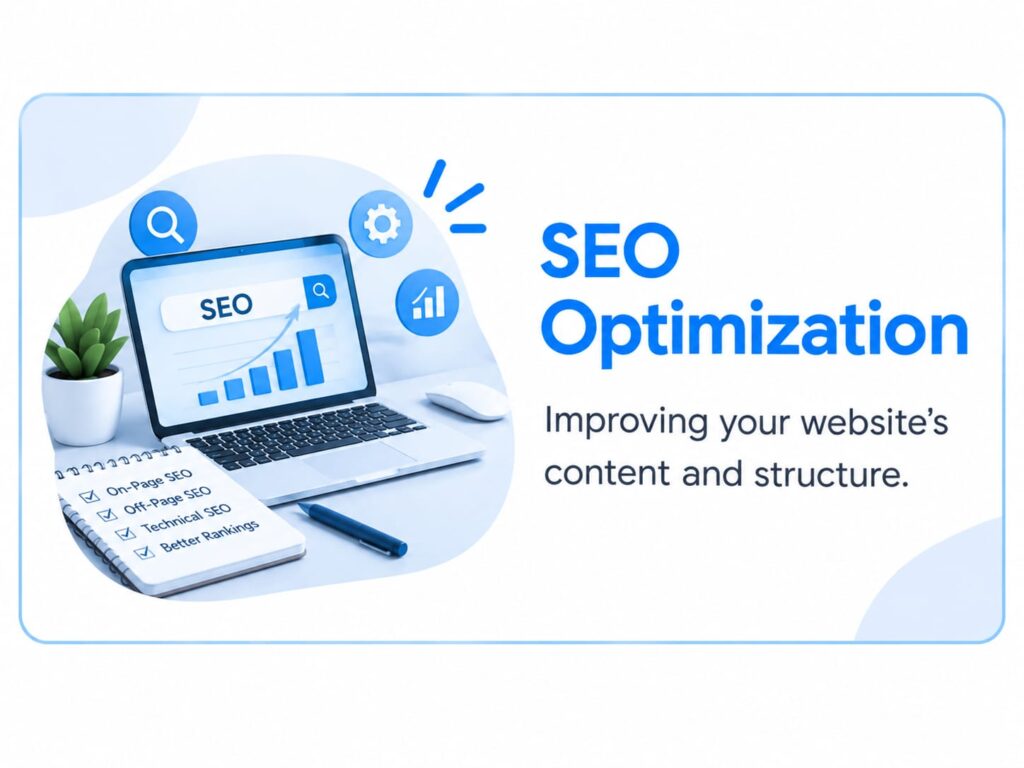
But how does SEO help a website rank on Google? SEO improves different elements of a website so that search engines can understand its content, evaluate its relevance, and show it to users searching for related information.
In this blog, we will understand how SEO works and how it helps websites improve their Google rankings.
What Is SEO?
SEO stands for Search Engine Optimization. It is the process of improving a website to increase its visibility in organic search results.
When people search for information, products, or services on Google, they usually visit websites that appear among the top results. SEO helps businesses improve their chances of appearing in those results.
SEO includes different activities, such as keyword research, content optimization, technical improvements, and link building.
How Does SEO Help a Website Rank on Google?
SEO helps Google understand your website and determine which searches your pages may be relevant for. Here are some important ways SEO can improve website rankings.
1. Keyword Research Helps Target the Right Audience
Keyword research is one of the most important parts of SEO. It helps you identify the words and phrases people use when searching for products, services, or information online.
For example, if you provide digital marketing services, people might search for:
- Digital marketing services
- SEO services for small businesses
- Website design services
- Content writing services
By using relevant keywords naturally in your website content, titles, and headings, you help search engines understand what your pages are about.
2. Quality Content Improves Website Visibility
Content plays an important role in SEO. Google aims to provide helpful and relevant information to users.
When you publish informative, original, and well-structured content, you give visitors a reason to explore your website.
For better content optimization:
- Write content that answers users’ questions.
- Use relevant keywords naturally.
- Create clear headings and subheadings.
- Avoid unnecessary repetition.
- Update outdated information when needed.
Quality content can help your website attract relevant organic traffic over time.
3. On-Page SEO Helps Google Understand Your Pages
On-page SEO focuses on optimizing elements within your website.
These elements help search engines understand the topic and structure of your content.
Some important on-page SEO elements include:
- SEO titles
- Meta descriptions
- Heading tags (H1, H2, H3)
- Image alt text
- Internal links
- URL structure
- Keyword placement
Proper on-page optimization makes your content easier to understand for both users and search engines.
4. Technical SEO Improves Website Performance
Technical SEO focuses on improving the technical aspects of a website so that search engines can crawl, understand, and index its pages.
Some important technical SEO factors include:
- Website loading speed
- Mobile-friendly design
- Secure HTTPS connection
- XML sitemap
- Robots.txt configuration
- Proper canonical tags
- Fixing broken links
A technically healthy website provides a better foundation for search visibility. However, technical SEO alone cannot guarantee higher rankings.
5. Off-Page SEO Builds Website Authority
Off-page SEO includes activities performed outside your website to improve its online reputation and authority.
Backlinks are an important part of off-page SEO. A backlink is a link from another website pointing to your website.
For example, if a relevant and trustworthy website links to your blog, it can help Google discover your content and may contribute to your site’s authority.
Some off-page SEO activities include:
- Building quality backlinks
- Guest posting
- Relevant business listings
- Brand mentions
- Promoting useful content
Remember that quality and relevance matter more than simply collecting a large number of backlinks.
How Long Does SEO Take to Improve Google Rankings?
SEO is a long-term process. It does not usually produce immediate results.
The time required depends on several factors, including website competition, content quality, website condition, keyword difficulty, and the SEO strategy being used.
Some websites may notice improvements within a few months, while others may require more time.
Consistent optimization, helpful content, and regular performance monitoring can support long-term growth.
Why Is SEO Important for Small Businesses?
SEO is especially useful for small businesses that want to increase their online visibility without depending entirely on paid advertising.
Here are some benefits of SEO:
- More Organic Traffic: SEO helps attract visitors through unpaid search results.
- Better Online Visibility: Your website can appear for relevant searches.
- Targeted Audience: You can reach people already searching for your products or services.
- Business Credibility: Helpful content and a professional website can build user trust.
- Long-Term Growth: SEO can support consistent website traffic over time.
Conclusion
SEO helps a website rank on Google by improving its content, structure, technical performance, and online reputation. From keyword research and on-page optimization to technical SEO and link building, every activity contributes to making a website more understandable and useful.
However, SEO is not a one-time task. It requires consistent effort, regular updates, and performance analysis.
If you want to improve your website’s visibility, attract potential customers, and build a stronger online presence, investing time in a proper SEO strategy is important.