Why Is SEO Important for Small Businesses?
Introduction
In today’s digital world, having a website is not enough to grow a business online. Your website also needs to reach the right audience. This is where Search Engine Optimization (SEO) becomes important. SEO helps businesses improve their visibility on search engines like Google and attract potential customers without paying for every click.
Whether you own a small shop, a startup, or an online business, SEO can help you build your online presence and reach more people.
What Is SEO?
Search Engine Optimization (SEO) is the process of improving a website to increase its visibility in organic search results. It includes optimizing website content, researching relevant keywords, improving website speed, and building quality backlinks.
The main goal of SEO is to help search engines understand your website and show its pages to people searching for related information, products, or services.
Why Is SEO Important for Small Businesses?
SEO offers several benefits to small businesses that want to grow online.
1. Improves Website Visibility
SEO helps your website appear in relevant search results. When people search for products or services related to your business, an optimized website has a better chance of reaching them.
For example, a person searching for “best digital marketing services” may discover a website that provides those services and has relevant, helpful content.
2. Attracts Targeted Traffic
Not every website visitor is a potential customer. SEO helps you target keywords related to your products, services, and audience.
For example, a website designing company can target keywords such as “website design services for small businesses” to reach people looking for website design solutions.
3. Builds Trust and Credibility
People often use search engines to find reliable information and businesses. Appearing in relevant search results can help improve brand awareness.
Publishing useful content, maintaining accurate business information, and providing a good website experience can also help build trust with potential customers.
4. Provides Long-Term Benefits
Unlike paid advertising, SEO does not require you to pay for every organic click. However, SEO still requires time, effort, and investment.
A well-optimized page can continue attracting visitors over time, although rankings and traffic may change due to competition, search engine updates, and changing user behaviour.
5. Helps You Understand Your Audience
Keyword research helps you understand what people are searching for online. You can use this information to create content that answers their questions and solves their problems.
For example, searches such as “how much does website design cost?” can inspire useful blog posts that address potential customers’ concerns.
What Are the Main Types of SEO?
There are several important areas of SEO that businesses should understand.
On-Page SEO
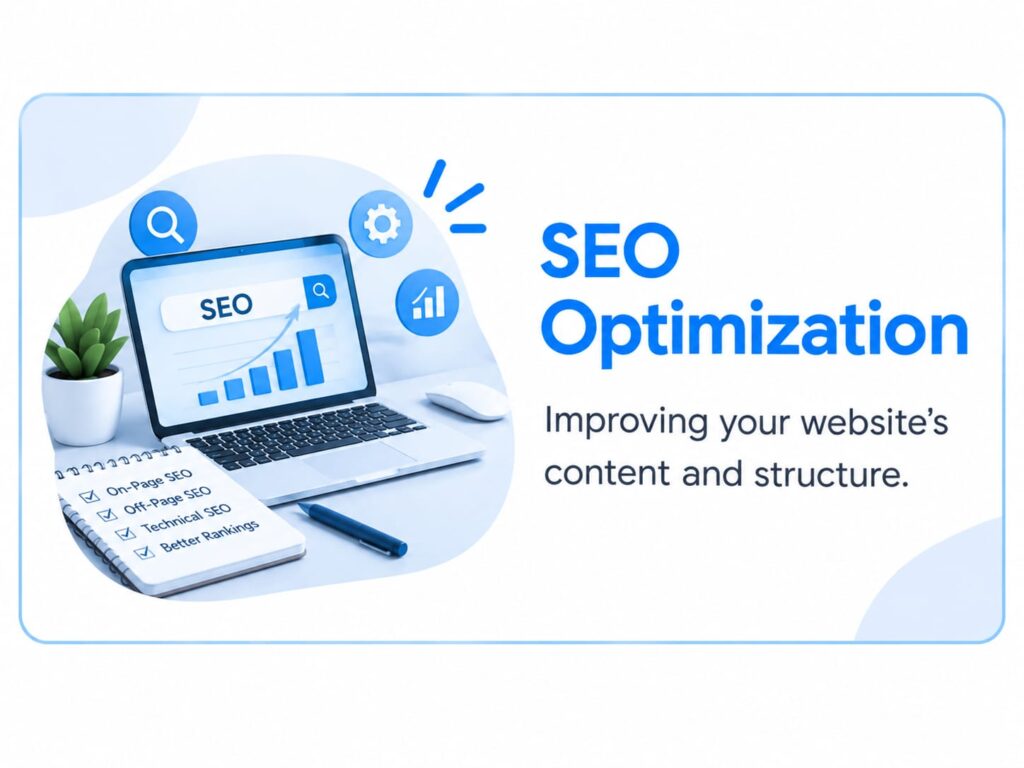
On-page SEO focuses on optimizing elements within your website, including headings, title tags, meta descriptions, URLs, internal links, and content.
Using relevant keywords naturally and creating helpful content can improve a page’s relevance to a search query.
Off-Page SEO
Off-page SEO focuses on activities outside your website that can support its reputation and authority.
Examples include earning quality backlinks, building brand awareness, and getting relevant mentions from trustworthy websites.
Technical SEO
Technical SEO helps search engines discover, crawl, and index your website effectively.
It includes improving website speed, ensuring mobile friendliness, fixing crawl errors, managing XML sitemaps, and using HTTPS.
How Can You Improve SEO for Your Website?
If you want to improve your website’s SEO, follow these practical steps.
1. Research Relevant Keywords: Find keywords that match your services and the information your audience needs.
2. Create Helpful Content: Write original blog posts and service pages that answer real questions instead of repeating keywords unnecessarily.
3. Optimize Title Tags and Meta Descriptions: Write clear titles and descriptions that accurately explain each page and encourage relevant users to visit.
4. Improve Website Speed: Make sure your website loads efficiently on mobile devices and desktop computers.
5. Use Internal Links: Link related pages together to help visitors discover more content and help search engines understand your website structure.
6. Build Quality Backlinks: Focus on earning links from relevant websites through useful content and genuine relationships.
7. Monitor Performance: Use Google Search Console to monitor impressions, clicks, search queries, and indexing issues.
Remember that SEO results take time. The timeline depends on your website’s condition, competition, content quality, and the strategies you implement.
How Long Does SEO Take to Show Results?
SEO does not produce guaranteed overnight results. Some pages may begin receiving impressions relatively quickly, while meaningful improvements in rankings and organic traffic can take several months or longer.
The timeline depends on factors such as keyword competition, website authority, technical issues, content quality, and the consistency of your SEO efforts.
Instead of focusing only on rankings, monitor organic traffic, relevant search impressions, clicks, and conversions to evaluate your progress.
Is SEO Better Than Paid Advertising?
SEO and paid advertising serve different purposes.
SEO focuses on improving organic visibility over time, while paid advertising allows businesses to display ads for selected audiences and search queries within their campaign budgets.
SEO may be useful for building a long-term online presence. Paid advertising can help businesses reach potential customers more quickly while campaigns are running.
For many businesses, combining SEO with paid advertising can be an effective approach, depending on their goals and budget.
Conclusion
SEO is an important part of building a successful online presence. It helps small businesses improve website visibility, attract relevant visitors, build credibility, and understand their target audience.
By focusing on keyword research, helpful content, technical improvements, and quality backlinks, you can create a stronger foundation for long-term organic growth.
SEO takes patience and consistent effort, but a well-planned strategy can help your business reach more potential customers online.